How to Ensure the Proper Bearing Bar Direction for Bar Grating
Bar Grating is a trusted solution for walkways, platforms, stair treads, mezzanines, and other load-bearing applications across industrial and architectural environments. However, while bar grating may appear straightforward, one specification detail has a major impact on performance and safety: bearing bar direction.
Ensuring the proper bearing bar direction is critical for structural integrity, load distribution, and long-term durability. In other words, incorrect orientation can reduce load capacity, increase deflection, and lead to premature failure. To help prevent that, this article explains what bearing bars are, why direction matters, and how to correctly specify bar grating for your application.
Quick Takeaways
Bearing bars carry the primary load in Bar Grating systems.
As a result, proper bearing bar direction ensures rated load capacity is achieved.
If not, incorrect orientation can result in excessive deflection or safety concerns.
Finally, clear communication during specification helps prevent costly errors.
What are Bearing Bars in Bar Grating?
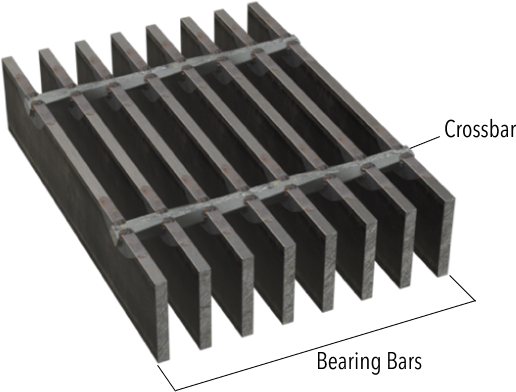
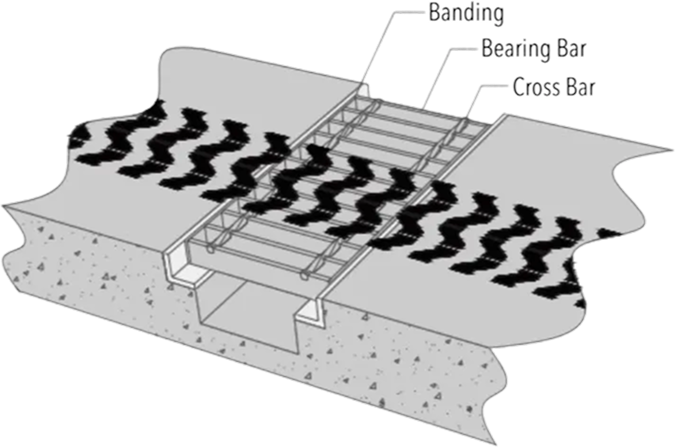
Bar Grating consists of two primary components: bearing bars and crossbars. Bearing bars are the main load-carrying members and run parallel to one another across the length of the panel. Crossbars run perpendicular to the bearing bars and are used to maintain spacing and provide stability.
The bearing bars are designed to span between supports and carry the applied loads. Because of this, their orientation relative to the supporting structure directly affects how weight is distributed across the Grating panel.
In Welded Bar Grating, Press-Locked Bar Grating, and Aluminum Bar Grating, the bearing bars carry most of the load. Crossbars provide rigidity and spacing but are not intended to support significant loads.
Bar Grating consists of two primary components: bearing bars and crossbars. Bearing bars are the main load-carrying members and run parallel to one another across the length of the panel. Crossbars run perpendicular to the bearing bars and are used to maintain spacing and provide stability.
The bearing bars are designed to span between supports and carry the applied loads. Because of this, their orientation relative to the supporting structure directly affects how weight is distributed across the Grating panel.
In Welded Bar Grating and Press-Locked Bar Grating, the bearing bars carry most of the load. Crossbars provide rigidity and spacing but are not intended to support significant loads.
Why Bearing Direction Matters
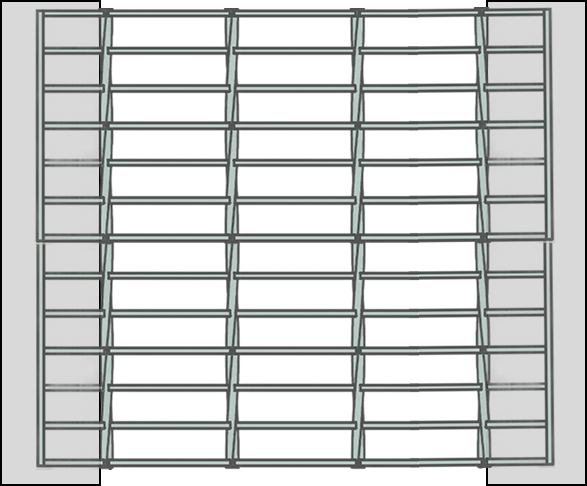
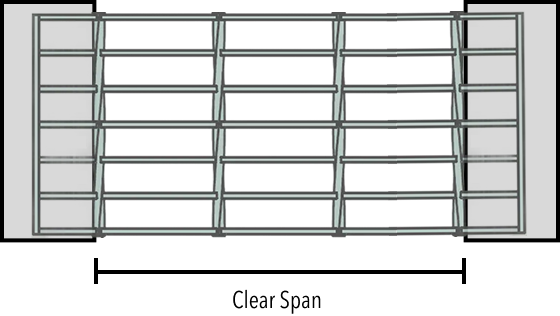
Bearing bar direction determines the effective span of the Grating panel. For this reason, when bearing bars are oriented correctly, they span the shortest distance between supports, maximizing load capacity and minimizing deflection.
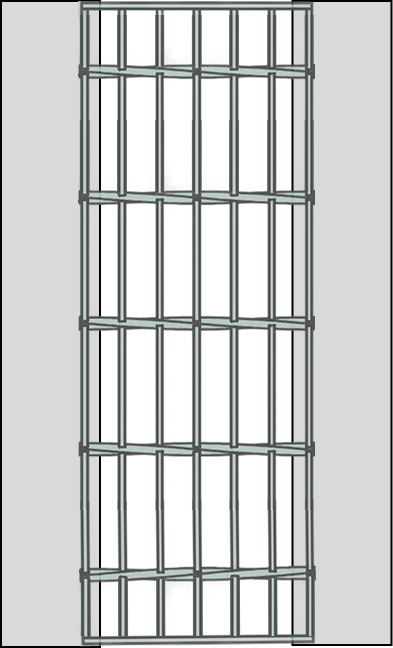
On the other hand, if bearing bars are oriented incorrectly and span a longer distance than intended, the Bar Grating may:
Deflect more than expected.
Fail to meet load requirements.
Create safety risks for foot traffic or equipment.
Require replacement or reinforcement.
In high-traffic or load-critical applications, even small errors in orientation can have serious consequences. That’s why bearing bar direction should never be assumed or left unspecified.
Correct Bearing Bar Orientation
Incorrect Bearing Bar Orientation
Understanding Support Conditions
To specify bearing bar direction correctly, it’s important to understand how the Bar Grating will be supported. Bar Grating is typically supported by beams, channels, angles, or concrete ledges. The bearing bars should span perpendicular to these supports. For example:
If supports run east to west, bearing bars should run north to south.
If supports are spaced 3 feet apart, bearing bars should span that 3-foot distance, not the longer panel dimension.
Before ordering, always identify the support spacing and orientation before selecting panel sizes and bearing bar direction.
Common Applications Where Direction Is Critical
Bearing bar direction is especially important in applications such as:
Elevated walkways and platforms
Mezzanines and catwalks
Stair treads and landings
Trench covers
Industrial floors with rolling loads
In these environments, Bar Grating is often designed to meet specific load ratings, including uniform loads, concentrated loads, and moving equipment loads. Therefore, improper orientation can compromise these ratings.
How Bar Grating Load Ratings Work
Bar Grating load tables are based on the bearing bars spanning a specific distance between supports. Because of that, these tables assume the bearing bars are oriented correctly.
Load ratings typically account for:
Bearing bar height and thickness
Material type (Carbon Steel, Stainless Steel, Aluminum)
Span length between supports
Allowable deflection limits
If the bearing bar direction is reversed, the actual span may exceed what the Bar Grating was designed to handle. As a result, this is one of the most common causes of field issues with Bar Grating installations.
How to Specify Bearing Bar Direction Clearly
To avoid confusion, bearing bar direction should always be clearly communicated during the specification and ordering process. Otherwise, relying on assumptions based on panel dimensions or drawings can lead to mistakes. When possible, provide shop drawings or sketches that show both the Grating layout and the supporting structure. Additionally, label the intended bearing bar direction directly on the drawing.
Mistakes to Avoid
Several common mistakes can lead to incorrect bearing bar direction:
Bearing bar depth and thickness
Material type (Carbon Steel, Stainless Steel, Aluminum)
Span length between supports
Allowable deflection limits
Even experienced teams can run into issues when bearing bar direction is not explicitly addressed. Fortunately, a few extra minutes during specification can prevent delays and rework later.
Special Considerations for Stair Treads and Trench Covers
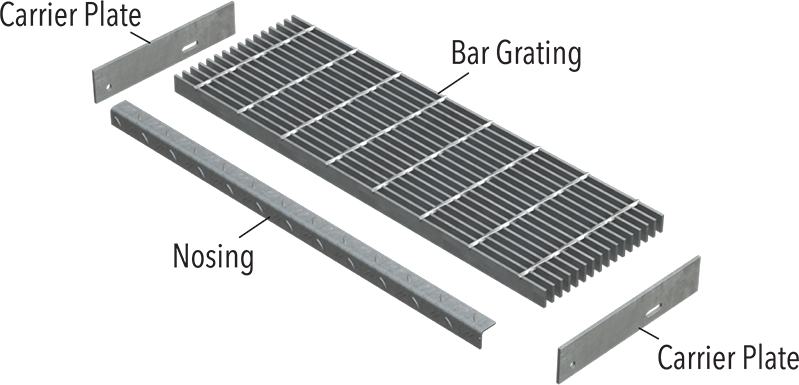
In Stair Treads, bearing bars typically run parallel to the nosing and span between stringers. As a result, this orientation ensures proper load support for foot traffic and compliance with safety requirements.
For trench covers, bearing bar direction should align with the trench width so that the bearing bars span the opening, not the length of the trench. Notedly, this detail is especially important for covers subject to vehicular or equipment loads.
Stair Tread Assembly
Trench Drain Installation
Coordination with Fabricators and Suppliers
Working with experienced Bar Grating suppliers can help ensure bearing bar direction is correct from the start. For example, suppliers can review drawings, confirm support conditions, and recommend appropriate grating types based on load and span requirements.
Ultimately, clear communication between designers, engineers, fabricators, and installers helps prevent misunderstandings and ensures the final product performs as intended.
Final Thoughts
Bearing bar direction may seem like a small detail, but it plays a major role in the performance and safety of Bar Grating systems. When installed correctly, proper orientation ensures load ratings are met, deflection is controlled, and long-term durability is achieved.
By understanding how bearing bars work, identifying support conditions early, and clearly specifying direction, project teams can avoid costly mistakes and ensure Bar Grating performs as designed. In the end, thoughtful specification helps protect both the structure and the people who rely on it every day.
McNICHOLS is the leading supplier of Specialty Metals and Gratings in the U.S. and has 19 locations nationwide. We are ready and Inspired to Serve® you at 855.318.8791, [email protected], or via Live Chat on mcnichols.com.